What is a meme coin and how do you trade it without losing your capital?
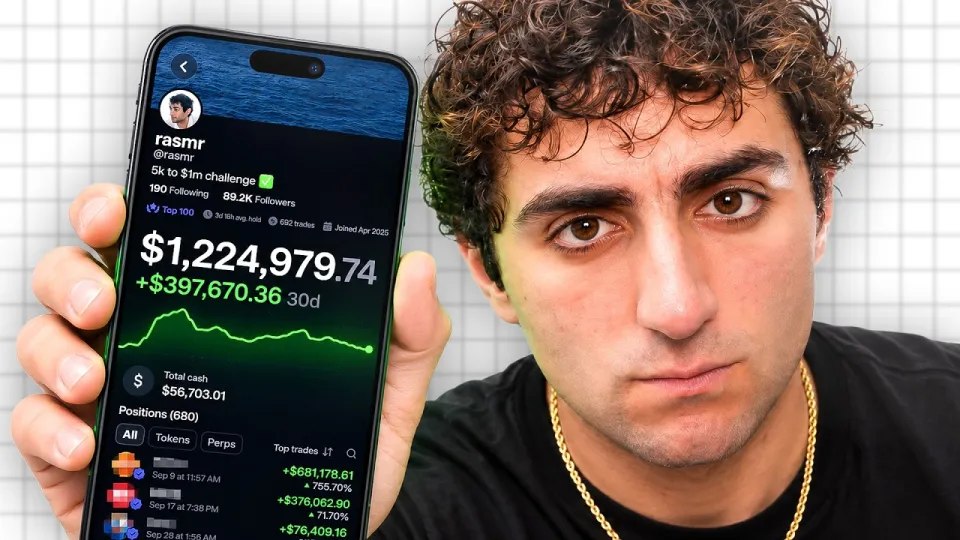
Video: 5 Years of Memecoin Knowledge in 12 Minutes
Want articles like this for your own video to promote it on YouTube and Google? Order them through the Telegram bot @sat_sit_bot. It writes articles around your video, embeds the video and publishes them on popular niche websites (no ads). Your first 50 articles are free.
· based on the channel rasmr
Key takeaways
- A meme coin is a token whose price rests on narrative, community and liquidity rather than on cash flow or product revenue.
- Market cap, not unit price, is the main reference point: a token at $0.0001 with a huge supply can still be worth hundreds of millions.
- Most of the upside in a meme coin happens in the first hours and days, so entry timing and exit discipline matter more than the story.
- Emotional trading — averaging into a loser, round-tripping a 50–100% gain, chasing a green candle — is the most commonly reported way traders lose money.
- In the rasmr breakdown, the practical edge is process: fixed position size, pre-set sell levels and a written thesis before the buy.
A meme coin is a cryptocurrency whose value comes from a narrative, a community and a meme rather than from revenue, cash flow or a working product. Traders buy it because they expect someone else to pay more later, so price is driven almost entirely by attention, liquidity and supply mechanics. The practical way to approach it is to treat every meme coin as a short-lived trade with a defined risk budget, not as a long-term investment — you can open an account and see live pairs via this FOMO registration link, which is the platform promoted in the rasmr video.
How a meme coin actually gets its price
A meme coin has no earnings, so its price is a function of how much money is chasing how many tokens. That makes three numbers matter more than any chart pattern: total supply, circulating supply and liquidity in the pool. A token priced at $0.00001 with a quadrillion supply can carry a multi-million-dollar valuation, while a token at $5 with a few thousand coins outstanding can be tiny. Always convert the unit price into market cap before you judge whether something is cheap. Liquidity is the second half of the equation: thin pools mean your own sell order moves the price against you, and a large position in a shallow pool is already a loss you have not realized yet. On top of that sits the launch structure — who received tokens before the public, at what valuation, and whether those wallets are locked or free to dump into your bid.
The lifecycle of a meme coin from launch to fade
A meme coin typically moves through four recognizable phases, and knowing which one you are in decides your strategy. In the launch phase, supply is concentrated and price discovery is violent; insiders and early wallets hold most of the float. In the attention phase, the narrative spreads — a ticker, a mascot, a trending topic — and volume expands faster than the holder base. In the distribution phase, early buyers begin selling into new demand, and the chart makes its highest-volume, most exciting candle right around the moment smart money is exiting. In the fade, liquidity thins, the narrative stops producing new buyers, and the price grinds down with occasional sharp bounces that trap late entrants. Most meme coins never leave the first two phases, and the ones that do rarely hold value for more than a few weeks. The practical takeaway is that the riskiest moment to buy is usually the most visually attractive one.
A risk framework before you buy a single token
Risk control is what separates a meme coin trader from a gambler, and it can be written down in five lines before any purchase.
- Fix a maximum position size as a percentage of your portfolio that you can lose entirely without changing your life — many experienced traders keep single meme positions in the low single digits.
- Write the thesis in one sentence: what the narrative is, who is likely to buy after you, and why they would pay more.
- Define the exit before the entry: a target where you sell a portion, and an invalidation level where you admit the trade is wrong.
- Check the holder distribution and liquidity pool size; a token where a handful of wallets control most of the supply is a different asset class from one with a broad base.
- Decide in advance how you will take profit — selling in tranches removes the all-or-nothing decision that ruins most trades.
None of this predicts price. It simply caps the damage when the narrative dies, which is the only variable you control.
Why emotions cost more than bad picks
The most expensive mistakes in meme coin trading are behavioral, not analytical. Traders report holding a position at a million in unrealized profit and giving it all back, or watching a 50–100% gain round-trip to zero because the chart looked like it would keep going. The same pattern appears on the losing side: refusing to accept a small loss, averaging down into a dying token, and hoping the chart returns to the entry price. Excitement at a green candle leads to buying the top; fear at a red one leads to selling the bottom. The fix is mechanical — pre-committed sell levels, a fixed position size, and a rule that no position is adjusted while you are emotional. A written plan made in a calm moment outperforms any in-the-moment judgment call, because the market is specifically designed to make that judgment call feel urgent.
Questions traders ask before their first meme coin trade
Beginners usually ask the same handful of things, and each has a workable answer. On rug risk: look at who holds the supply, whether liquidity is locked, and whether the contract allows the deployer to mint or drain — a token with a concentrated holder list and unlocked liquidity is a rug candidate regardless of how good the meme is. On small capital: starting small is not a disadvantage, because the process you learn at $50 is identical to the process at $50,000, and mistakes are cheaper. On narrative coins tied to a future event or a brand: a recognizable name does not create demand by itself, and a token built on someone else's intellectual property carries legal and delisting risk on top of normal market risk. On "who is behind the launch": closed groups that hear about tokens before the public do exist, but by the time information reaches you it has usually already been priced in, so treat early-access claims as a reason for extra caution rather than a strategy.
How to size, enter and exit a meme coin trade
Execution is a sequence, and doing it in order prevents most self-inflicted losses. First, size the position so a total loss is acceptable. Second, enter in one or two orders rather than chasing a vertical candle, accepting that you will not get the exact bottom. Third, set your sell plan immediately: for example, sell a third at the first target, a third at the second, and let the remainder run with a stop that protects the original capital. Fourth, review the trade after it closes — not during it — and record whether you followed the plan or improvised. Traders who survive multiple cycles tend to be the ones who treat profit-taking as part of the trade rather than as a betrayal of a good story. The narrative is the reason the trade exists; the exit is the reason it makes money.
Useful links
- FOMO — registration and trading platform used in the rasmr video
- Trading community and Discord group from the video: https://discord.gg/catalystfnf
Bottom line
A meme coin is a narrative-driven token where supply, liquidity and attention set the price, and where the trader's own discipline decides the outcome. The rasmr breakdown of five years of memecoin experience lands on the same conclusion that shows up in the comments: never let emotions drive the trade, and never let a large unrealized gain evaporate because the chart looked strong. Start with a small position, write the thesis and the exit before you buy, and treat every token as a trade with a defined risk rather than a holding. If you want to follow along with the platform and community used in that video, you can register through the FOMO link and join the discussion in the channel's Discord.
Questions & answers
What exactly is a meme coin and how is it different from Bitcoin?
A meme coin is a token whose price is driven by narrative, community and liquidity rather than by scarcity, adoption or network security. Bitcoin has a fixed issuance schedule and a decade-plus of institutional infrastructure behind it, while most meme coins have concentrated supply, thin liquidity and a lifespan measured in weeks. That makes a meme coin a short-term trade with a defined risk budget, not a savings asset.
How do I tell whether a meme coin is likely to rug?
Check three things: who holds the supply, whether liquidity is locked, and what the contract allows the deployer to do. A short list of wallets controlling most of the tokens, unlocked liquidity, or a mint function that can inflate supply are all red flags. A good meme does not fix bad token mechanics.
Is it worth starting with a small amount of capital?
Yes, because the process is identical at any size. Position sizing, entry discipline, profit-taking in tranches and post-trade review all work the same with a small bankroll, and the mistakes cost far less while you learn them. Scaling up later is easy; recovering from a blown account is not.
Why do traders give back large profits on meme coins?
Usually because the exit was never defined before the entry. When a position is up 50–100%, the chart looks strongest right before distribution begins, and holding for more feels justified in the moment. Pre-committed sell levels and selling in tranches remove that decision from the emotional part of the trade.
Source: 5 Years of Memecoin Knowledge in 12 Minutes · Markdown version